
GHK-Cu
Price range: $54.99 through $89.99
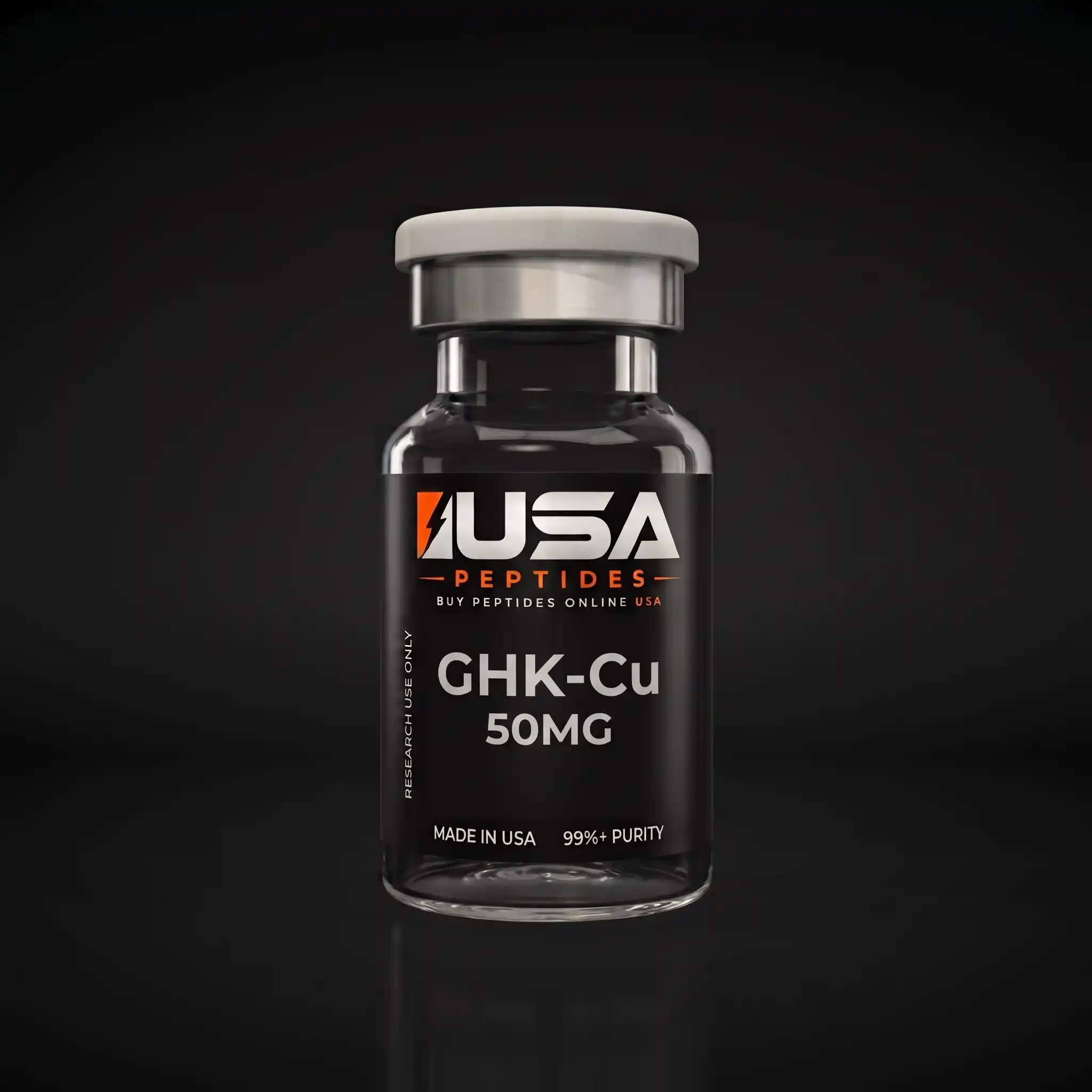
GHK-Cu (Copper Tripeptide-1) is a highly purified research peptide designed for precise biochemical and cellular assays. Formulated to a verified purity standard of 99% or higher, this lyophilized compound delivers exceptional stability and consistent results across tissue remodeling protocols. Each vial is ready for laboratory reconstitution, giving researchers a reliable tool to study collagen synthesis, cellular signaling, and gene expression.
- Physical Form: Lyophilized blue powder / cake in a sealed glass vial
- Verified Purity: ≥99% HPLC and Mass Spectrometry tested
- Fast Domestic USA Shipping: Dispatched from USA warehouses within 24–48 hours
Buy GHK-Cu Online
GHK-Cu is a high-purity copper tripeptide compound designed for advanced in-vitro biochemical research. Every vial undergoes third-party testing to confirm a purity level of 99% or higher. Researchers select this compound to investigate cell signaling, tissue remodeling, and extracellular matrix pathways. Our lyophilized blue powder offers consistent batch-to-batch quality for your laboratory assays.
Product Technical Profile
| Property | Specification |
|---|---|
| Product Name | GHK-Cu (Copper Tripeptide-1) |
| Chemical Formula | C14H24CuN6O4 |
| Molecular Weight | 403.94 g/mol |
| CAS Number | 49557-75-7 / 89030-95-5 |
| Sequence | Glycyl-L-histidyl-L-lysine copper complex (Gly-His-Lys-Cu) |
| Physical Appearance | Blue fine freeze-dried (lyophilized) powder |
| Purity Standard | ≥99.0% (HPLC & Mass Spectrometry verified) |
| Storage Conditions | Store dry at -20°C; store reconstituted solution at 2-8°C |
Lab Testing Verification & Certificate of Analysis (COA)
We test every production lot using two main testing methods: High-Performance Liquid Chromatography (HPLC) and Mass Spectrometry (MS). HPLC acts like a chemical race track. It separates the components in a sample to prove that GHK-Cu makes up 99% or more of the vial contents. Mass Spectrometry measures the exact mass of the molecule to confirm its true chemical identity.
Researchers can easily check our quality. Simply match the lot number printed on your glass vial to the corresponding Certificate of Analysis (COA) available on Buypeptidesonlineusa.org. We provide transparent laboratory data so you can perform your experiments with complete confidence.
What Is GHK-Cu?
GHK-Cu is a naturally occurring copper complex made of three amino acids: glycine, histidine, and lysine. Scientists call a short chain of amino acids a peptide. In this molecule, the peptide sequence binds tightly to a copper ion (Cu2+). This copper bond gives the material its distinct blue color.
First discovered in human blood plasma, GHK-Cu plays a natural role in signaling cells to build and repair tissue. For scientific research, this compound is created through solid-phase peptide synthesis. Synthesis produces a clean, identical version of the peptide that is free from biological contaminants. Researchers study GHK-Cu in controlled cell cultures to observe how copper-binding peptides influence gene expression and structural protein synthesis.
Specific Primary Use & Target Function
The primary use of GHK-Cu in laboratory research is the study of cellular remodeling and extracellular matrix dynamics. The extracellular matrix is the structural scaffold that holds cells together in living tissue. Researchers use GHK-Cu to observe how target cells build collagen, elastin, and other structural proteins.
Scientists choose GHK-Cu over uncomplexed peptides because the bound copper ion is required for key biological signaling. Without copper, the base GHK peptide lacks the ability to activate specific enzyme systems. GHK-Cu serves as a dedicated carrier that delivers copper directly to cell receptors. This makes it an essential tool for experiments focused on tissue repair models, fibroblast activity, and cellular response to environmental stress.
Mechanism of Action & Scientific Research
GHK-Cu operates through a simple lock-and-key biochemical mechanism. Cell surfaces feature specialized docking stations called receptors. GHK-Cu acts like a precise key that fits into these cell receptors. Once bound, the peptide turns on intracellular signaling pathways that control protein production and cell growth.
When GHK-Cu unlocks these pathways, it signals cell nuclei to alter gene transcription. Laboratory data shows that GHK-Cu upregulates genes responsible for producing collagen, elastin, and glycosaminoglycans. At the same time, it downregulates genes that promote chronic inflammation and tissue breakdown. The copper ion also acts as a cofactor for superoxide dismutase (SOD), an enzyme that neutralizes dangerous free radicals in cellular environments.
Published research demonstrates these broad regulatory effects. In a landmark study published in BioMed Research International, Pickart et al. (2015, PMID: 26236408) demonstrated that GHK-Cu modulates thousands of genes involved in skin regeneration and cell repair. Further research by Pickart and Margolina (2018, PMID: 29986520) in the International Journal of Molecular Sciences confirmed that GHK-Cu resets gene expression to a healthier, more resilient state in damaged cell models.
Laboratory Research Applications
Researchers utilize GHK-Cu across several distinct areas of cellular and molecular biology:
- Extracellular Matrix Synthesis: Measuring changes in collagen type I, collagen type III, and elastin levels in fibroblast cultures.
- Wound Healing Models: Observing cell migration and closure rates in standard scratch assays.
- Gene Expression Profiling: Analyzing changes in gene expression related to antioxidant production and tissue remodeling.
- Anti-Inflammatory Signaling: Studying the downregulation of pro-inflammatory cytokines like interleukin-6 (IL-6) and TNF-alpha.
- Antioxidant System Activation: Testing the enzymatic activity of copper-dependent superoxide dismutase (SOD1) in stressed cells.
Key Observable Benefits for Researchers
During in-vitro testing, researchers can monitor clear, measurable parameters when applying GHK-Cu to cell lines:
- Increased expression of collagen and elastin mRNA within target cells
- Faster cellular migration across scratch gaps in cell culture dishes
- Higher activity levels of cellular antioxidant enzymes
- Lower baseline secretion of inflammatory signaling proteins
- Improved cell survival rates when exposed to oxidative stress markers
Why Buy From Buypeptidesonlineusa.org?
Buypeptidesonlineusa.org is a trusted supplier of research chemicals in North America. We focus on providing high-grade materials for scientific laboratories and independent researchers. Here is why laboratories rely on our products:
- Verified Purity: Every batch is tested to reach or exceed 99.0% purity using HPLC and MS verification.
- Full Transparency: Batch-specific Certificates of Analysis (COAs) are easily accessible online.
- Protective Packaging: Vials are vacuum-sealed and shielded to protect against light, air, and moisture.
- Fast Domestic USA Shipping: All orders ship quickly from inside the United States to prevent international customs delays.
- Reliable Support: Our team is ready to answer technical product questions for your lab operations.
Storage, Reconstitution & Shipping Protocol
Proper handling ensures the long-term stability of your GHK-Cu sample. Follow these laboratory guidelines:
Storage before reconstitution: Store the freeze-dried powder in a freezer at -20°C. Keep the vial away from direct light and moisture. Unopened vials remain stable for up to 24 months under freeze conditions.
Reconstitution protocol: Allow the vial to reach room temperature before adding liquid. Gently inject Bacteriostatic Water (0.9% benzyl alcohol) or Sterile Water down the inner glass wall of the vial. Do not shake the vial forcefully. Gently swirl the liquid in a slow circular motion until the blue powder dissolves completely.
Storage after reconstitution: Keep the liquid solution refrigerated at 2-8°C. Use the solution within 30 to 60 days for best scientific consistency.
Shipping details: Lyophilized peptides are stable at room temperature during transit. We ship all orders in secure, temperature-aware packaging across the USA.
Frequently Asked Questions
What is the primary laboratory use of GHK-Cu?
GHK-Cu is primarily used in cell culture research to study collagen production, cell migration, extracellular matrix rebuilding, and anti-inflammatory pathways.
What liquid should be used to reconstitute GHK-Cu?
Researchers typically use Bacteriostatic Water or Sterile Water for Injection. Bacteriostatic water contains a preservative that prevents bacterial growth during repeated lab sampling.
What is the safe mixing method for reconstituting the peptide?
Always add the reconstituting liquid slowly along the side of the glass vial. Swirl the vial gently until the powder is fully dissolved. Avoid vigorous shaking, which can break peptide bonds.
How stable is GHK-Cu once reconstituted?
Once dissolved in liquid, GHK-Cu remains stable for up to 60 days when kept in a cold refrigerator between 2°C and 8°C.
How fast is domestic shipping from Buypeptidesonlineusa.org?
We dispatch orders directly from our USA warehouse. Most domestic researchers receive their shipments within 2 to 5 business days.
How can I verify the purity and view the COA for my vial?
Locate the lot number printed on your vial label. Visit Buypeptidesonlineusa.org and enter your lot number in our COA lookup tool to view the HPLC and Mass Spectrometry reports.
Scientific References & Literature Citations
- Pickart, L., Vasquez-Soltero, J. M., & Margolina, A. (2015). GHK Peptide as a Natural Modulator of Multiple Cellular Pathways in Skin Regeneration. BioMed Research International, 2015, 648108. PMID: 26236408.
- Pickart, L., & Margolina, A. (2018). Regenerative and Protective Actions of the GHK-Cu Peptide in the Light of the New Gene Data. International Journal of Molecular Sciences, 19(7), 1987. PMID: 29986520. PMCID: PMC6073405.
Regulatory Compliance & Research Disclaimer
All products available on Buypeptidesonlineusa.org are strictly manufactured for laboratory in-vitro and scientific research use only. They are not intended for human consumption, clinical use, or medical diagnosis.
| Select MG | 50MG, 100MG |
|---|
Related Products
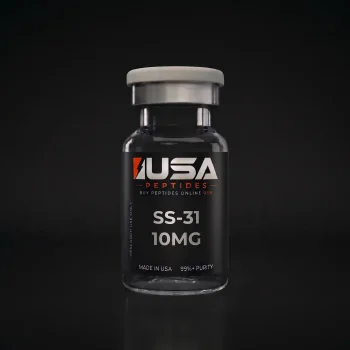
SS-31 is a highly pure, synthetic tetrapeptide designed specifically for targeted mitochondrial research. Every batch is produced under strict quality standards to ensure a purity rating of 99% or higher. It serves as an essential tool for investigators studying cellular energy production, mitochondrial structure, and oxidative stress reduction in controlled laboratory settings.
- Physical Form: Lyophilized white powder (vacuum-sealed vial)
- Verified Purity: ≥99% confirmed via HPLC and Mass Spectrometry
- Fast Domestic USA Shipping: Ships directly from our US warehouse in temperature-shielded packaging
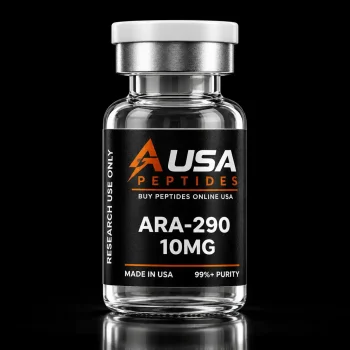
ARA-290 10MG (Cibinetide) is a synthetic 11-amino acid peptide engineered to activate the body’s innate repair system without stimulating red blood cell production. Each vial contains 10 milligrams of highly purified, freeze-dried peptide optimized for precise laboratory assays. Researchers utilize this specialized compound to investigate tissue preservation, cellular protection, and small nerve fiber regeneration.
- Physical Form: Sterile lyophilized (freeze-dried) white powder
- Verified Purity: Greater than or equal to 99% (HPLC & Mass Spectrometry verified)
- Fast Domestic USA Shipping: Secure insulated packaging dispatched rapidly from US facilities
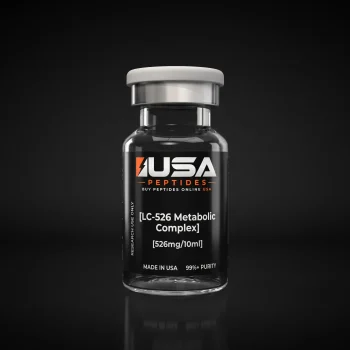
LC-526 Metabolic Complex is a high-grade research peptide blend engineered to investigate cellular metabolism, fat breakdown, and mitochondrial energy production. Every vial undergoes strict quality controls to ensure a purity standard of 99% or higher. It is freeze-dried and sealed under sterile conditions, making it ready for accurate laboratory testing.
- Physical Form: Lyophilized (freeze-dried) powder in a sterile glass vial
- Verified Purity: ≥99% pure as verified by independent HPLC testing
- Fast Domestic USA Shipping: Express dispatch from USA facilities with protective packaging
10 in stock
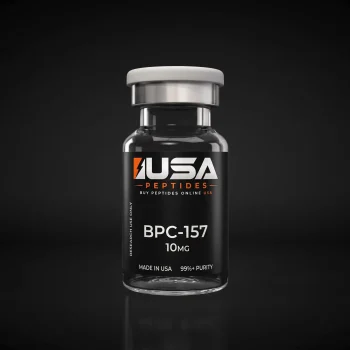
Premium laboratory-grade BPC-157 (Body Protection Compound-157) lyophilized powder, formulated for high-precision scientific evaluation and analytical research. Synthesized in the USA to meet strict quality benchmarks, ensuring optimal stability, reconstitution performance, and sequence fidelity.
- Physical Form: High-purity lyophilized (freeze-dried) white powder in a sealed glass vial.
- Verified Purity: Greater than or equal to 99% purity confirmed by HPLC and Mass Spectrometry.
- Fast Domestic USA Shipping: Quick dispatch from USA warehouses in protective, temperature-controlled packaging.
206 in stock
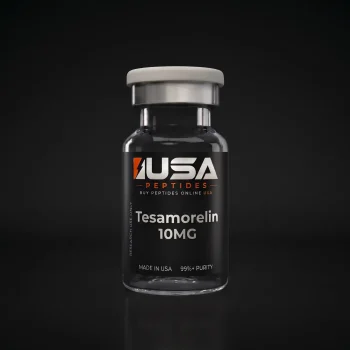
Tesamorelin (10MG) is a high-purity synthetic peptide designed for advanced laboratory research into growth hormone pathways and tissue metabolism. Every batch provides a stabilized lyophilized powder verified at greater than or equal to 99% purity through independent testing. This compound gives researchers a dependable model to study natural growth hormone release, lipid breakdown, and metabolic signaling. Order today from Buypeptidesonlineusa.org to receive laboratory-grade peptides supported by fast domestic USA shipping and verified quality guarantees.
- Physical Form: Lyophilized white cake/powder (10mg single vial)
- Verified Purity: ≥99% purity rating confirmed by HPLC and Mass Spectrometry
- Fast Domestic USA Shipping: Ships directly from US facilities with thermal packaging
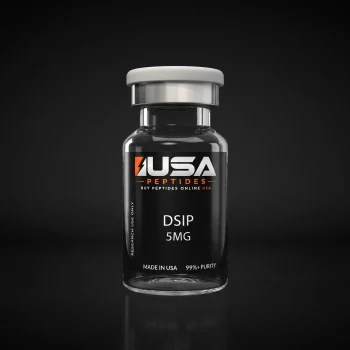
DSIP (Delta Sleep-Inducing Peptide) is a premium-grade neuropeptide provided in a 5mg lyophilized vial for precise laboratory analysis. Sourced under strict quality controls, this compound is designed to support academic and scientific investigations into sleep regulation and related neurological pathways. This product is intended strictly for laboratory research purposes and is not for human consumption, diagnostic, or therapeutic use.
117 in stock
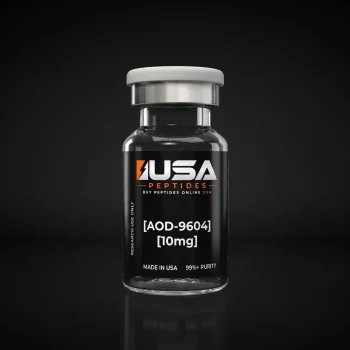
AOD-9604 10MG is a high-purity research peptide designed specifically for advanced metabolic and cellular lipid assays. Each vial delivers 10mg of freeze-dried material, independently tested to guarantee a minimum purity of 99 percent. Researchers choose this refined growth hormone fragment for its consistent stability and reproducible results in laboratory experiments.
- Physical Form: Sterile, lyophilized (freeze-dried) white cake or powder in a sealed glass vial.
- Verified Purity: Greater than or equal to 99% purity confirmed by HPLC and Mass Spectrometry testing.
- Fast Domestic USA Shipping: Dispatched rapidly from our US facility with secure, temperature-conscious packaging.
100 in stock
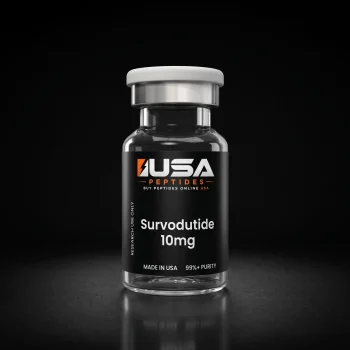
Survodutide 10MG is a premium dual-agonist peptide engineered specifically for high-level biochemical research. Each batch is manufactured under strict quality standards to ensure a verified purity level of 99% or higher. This research vial provides accurate, reproducible results for scientific studies focused on metabolic pathways and cellular signaling.
- Physical Form: High-grade lyophilized powder in a sealed glass vial.
- Verified Purity: 99% or greater purity confirmed by independent lab testing.
- Fast Domestic USA Shipping: Prompt dispatch with protective temperature-controlled packaging.
Out of stock
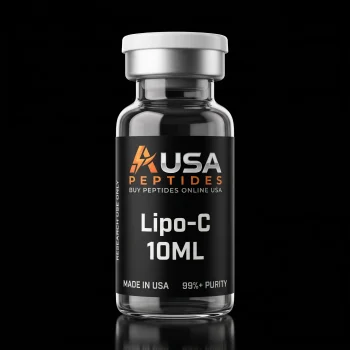
Lipo-C 10ML is a high-purity lipotropic research compound formulated to investigate cellular lipid transport and energy metabolism. Each multi-dose glass vial contains a sterile, high-concentration solution designed for consistent testing in lab assays. Third-party testing confirms purity levels of 99% or higher, giving researchers dependable results across every experiment.
- Physical Form: 10mL liquid solution in a sterile, multi-dose vial.
- Verified Purity: Greater than or equal to 99% purity confirmed by HPLC testing.
- Fast Domestic USA Shipping: Shipped rapidly from domestic hubs in protective packaging.
57 in stock
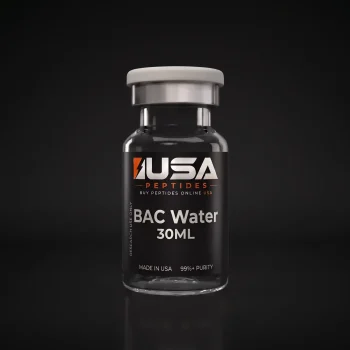
BAC Water 30ML is a sterile, multi-dose solvent designed to dissolve laboratory research peptides and proteins safely. Formulated with 0.9% benzyl alcohol, this liquid stops bacterial growth and keeps samples stable for repeated assay testing. Every vial undergoes rigorous laboratory testing to ensure high purity and consistency for your research experiments.
- Physical Form: Clear, colorless sterile liquid solution in a 30ml multi-dose glass vial.
- Verified Purity: Standardized with 0.9% USP-grade Benzyl Alcohol, verified by high-performance testing.
- Fast Domestic USA Shipping: Dispatched quickly from domestic facilities with secure, protective packaging.
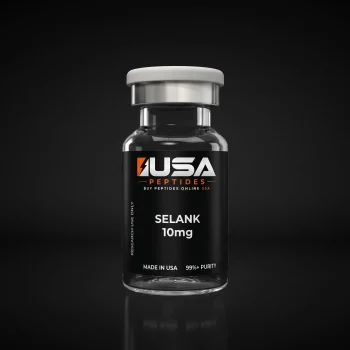
Selank 10mg is a premium, synthetic heptapeptide engineered for advanced laboratory research into central nervous system signaling and neuroprotective pathways. Every vial undergoes rigorous batch testing to ensure a verified purity level of at least 99%. This high-grade research compound provides consistent, repeatable results in cellular and tissue assays, making it an essential tool for neurochemical studies.
- Physical Form: Lyophilized (freeze-dried) white powder in a sealed 10mg glass vial
- Verified Purity: Greater than or equal to 99% purity confirmed by HPLC analysis
- Fast Domestic USA Shipping: Direct dispatch from our domestic facility for rapid lab delivery
198 in stock
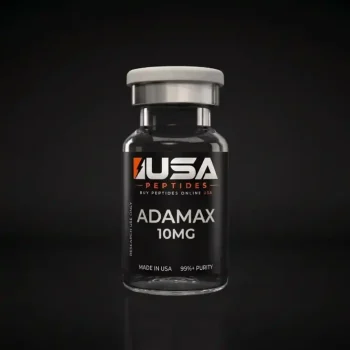
ADAMAX 10mg is a premium, synthetic peptide derivative engineered specifically for high-precision laboratory and in-vitro research. By combining the core N-acetyl Semax peptide structure with a unique adamantyl moiety, ADAMAX offers superior enzymatic stability and enhanced cellular permeability during scientific assays. Every batch is independently tested to guarantee a minimum purity of 99%, providing consistent, reproducible data for your laboratory setup.
- Physical Form: Lyophilized (freeze-dried) white powder in a sealed glass vial
- Verified Purity: Greater than or equal to 99% (HPLC and Mass Spectrometry verified)
- Fast Domestic USA Shipping: Ships directly from our USA warehouse within 24–48 hours